
A fitting begins before I ever pick up the chalk.
A new client, a new suit, a new task. Sometimes everything is straightforward. Sometimes I can see right away that it will not be easy.
I do not start with measurements.
First I watch the person: how he studies his reflection, how he greets me and introduces himself, how he describes what he feels, what he likes and what he does not like about the suit he has chosen. At the same time, I take in the build, the proportions, and the fit.
Then I begin.
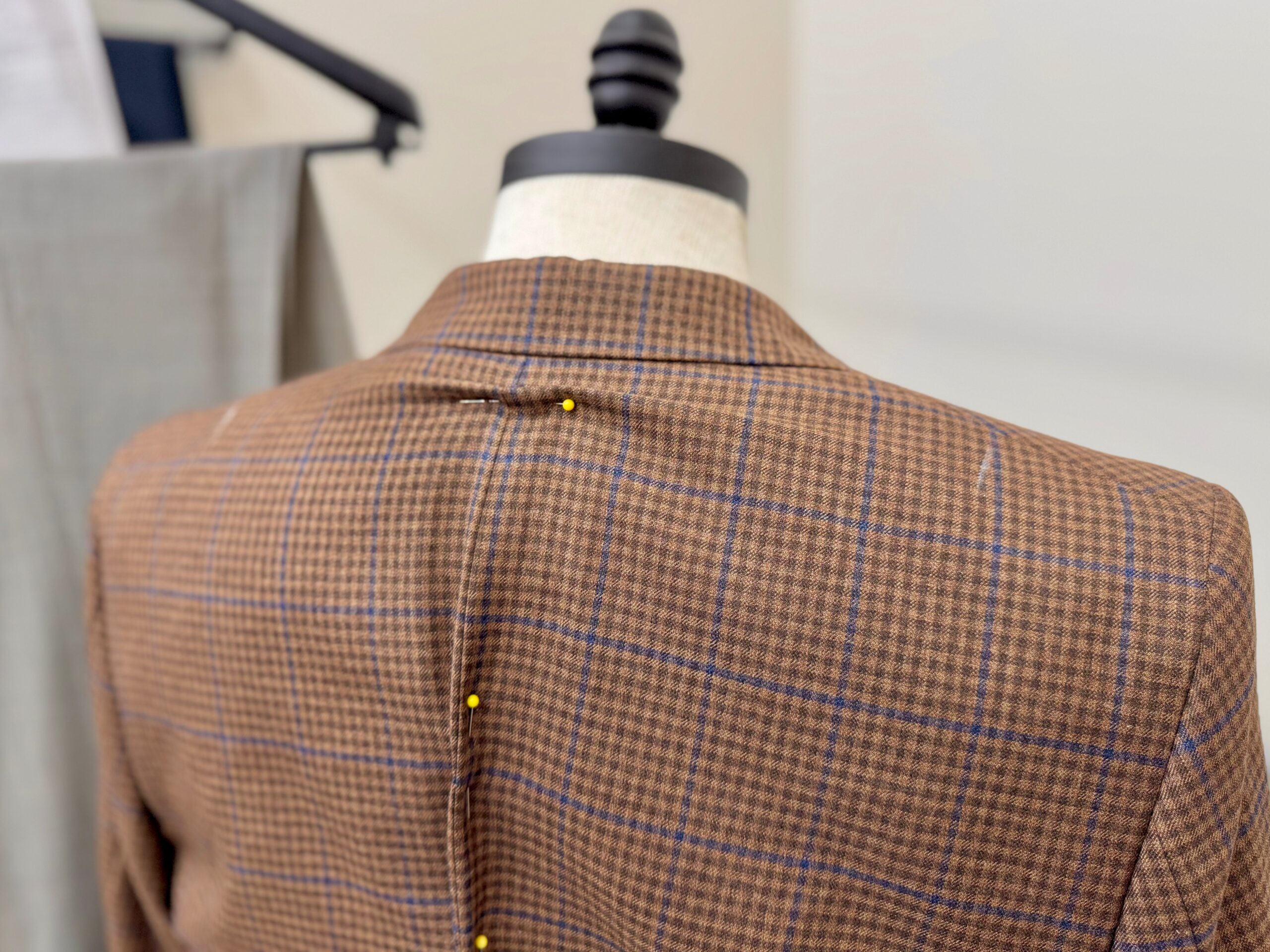
With a regular client, it is often simpler to offer a solution directly. We have already been through the stage of wanting to explore every available option. He knows my approach and my experience.
I suggest. He agrees.
That is not indifference to other possibilities. It is the result of trust that has already been tested.
Once, a regular client came in and asked the sales staff to find me before he had even chosen anything. I suggested that he let them show him the new arrivals while I finished with another client. I would join him shortly.
He had a different idea. He would step out, get a coffee next door, make a few calls, and come back. I would bring him whatever I thought would work for him.
In that case, the selection was already my work.
We both gained time.
With a new client, it is different.
He may set aside the first suggestion and ask to see more. That is fine. I treat it as additional information about his preferences.
I watch how he responds to different colors, silhouettes, and cuts. What he reaches for. What he pushes away. Where he changes his mind.
Gradually, it becomes clear what he actually needs.
Sometimes, at the end, he comes back to the very first option.
For me, that confirms the recommendation was right. For him, it confirms that the first suggestion was not made simply because I needed to sell that particular piece.
After that, trust extends to the next decisions: a shirt, a tie, shoes.
Sometimes the whole color palette changes. I explain why and show the result.
Words help. The mirror decides.
Clients often come with someone.
The person with him may simply be there. Sometimes it is just a smile, a short conversation, and easy agreement.
But sometimes there is a need for an outside opinion.
For a new client, the opinion of a friend, a wife, or a partner carries natural authority. They have known him a long time and, as he sees it, they are critical and objective.
Arguing in that situation rarely helps.
If I think the size or fit is wrong, I change the size. Change the fit. Use pins. Show a different way the garment sits, a different length, a corrected balance.
The result has to speak for itself.
When the client looks in the mirror and says, “This is what I wanted,” that is more convincing than any argument I could make.
We have just met. From the client’s point of view, it is not always easy to defer to someone who has an interest in the sale.
So my goal is not to win the argument.
My goal is to make the argument unnecessary.
Words can explain a decision. But the final decision comes from what the person sees in the mirror.
That is why I try to read the situation before I take any measurements.
Measurements give numbers.
Observation gives an understanding of what to do with them.