A client sees a finished jacket. A tailor sees why it fits the way it does.
A clean sleeve head. The right length. The balance of the back. A barely visible tension in the fabric. A superfluous fold.
Much of this the client will never notice.
Hours of work, fittings, small decisions made and reconsidered, all come together into a single impression.
The master knows more than the eye can see.
In this, tailoring is close to short literary forms. To haiku, for example.
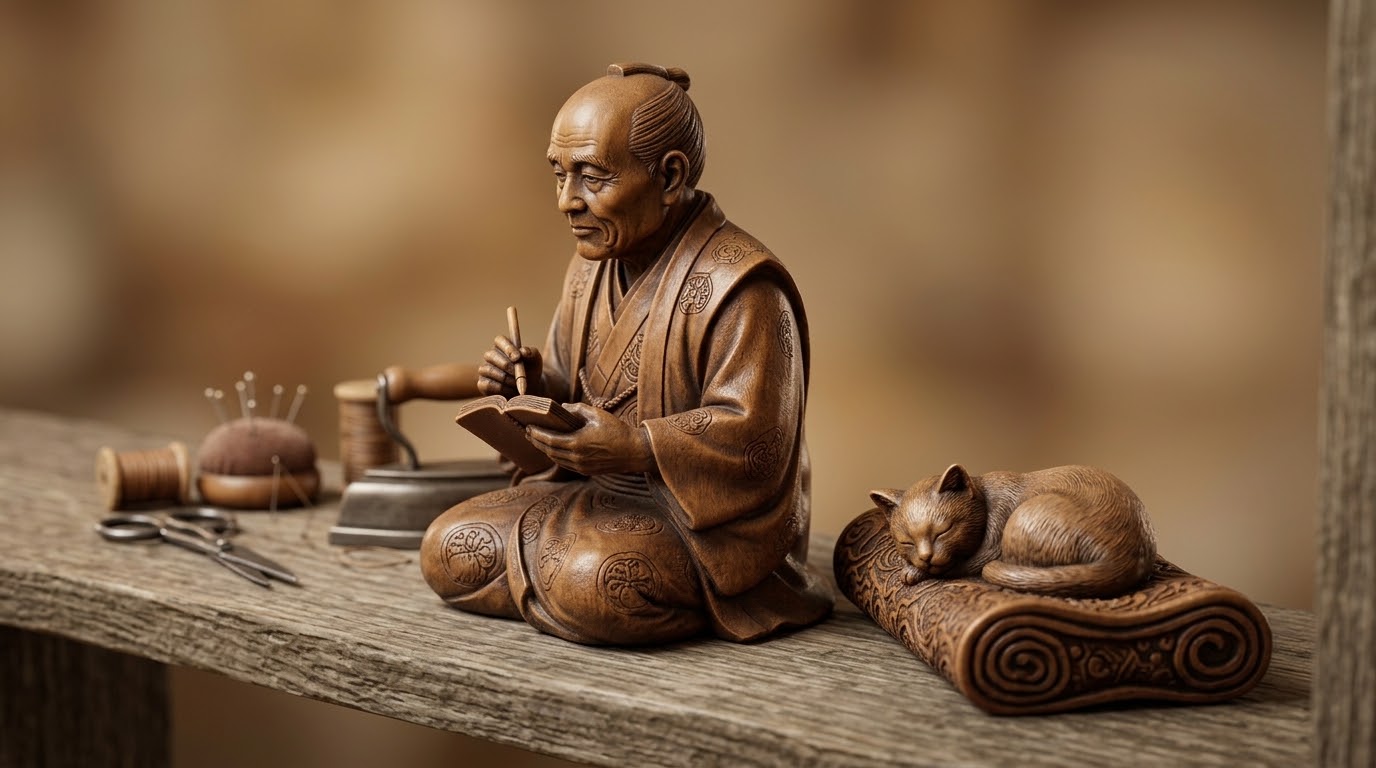
The author also knows more than he says.
At first glance, a haiku seems simple. As if something is missing.
Half the text is not there.
Words occupy only part of the space. The rest lives between them.
And the reader fills it in from his own memory, experience, and feeling.
The same poem leaves a different echo.
Something similar happens in clothing.
Inside a finished suit there is something no one will see: hand stitching, structural balance, fittings, decisions made along the way.
Not to hide the work.
So the work can do what it is meant to do.
When the suit is ready, the tailor steps aside.
The client looks in the mirror.
Now the suit must become his.
The master’s work ends where he is no longer visible.
The same is true of the writer.
When the text is finished, he recedes and leaves it to the reader.
Mastery is not only knowing what to do.
It is also knowing where to stop.
Eye sees. Hand knows.
And the rest happens between them.