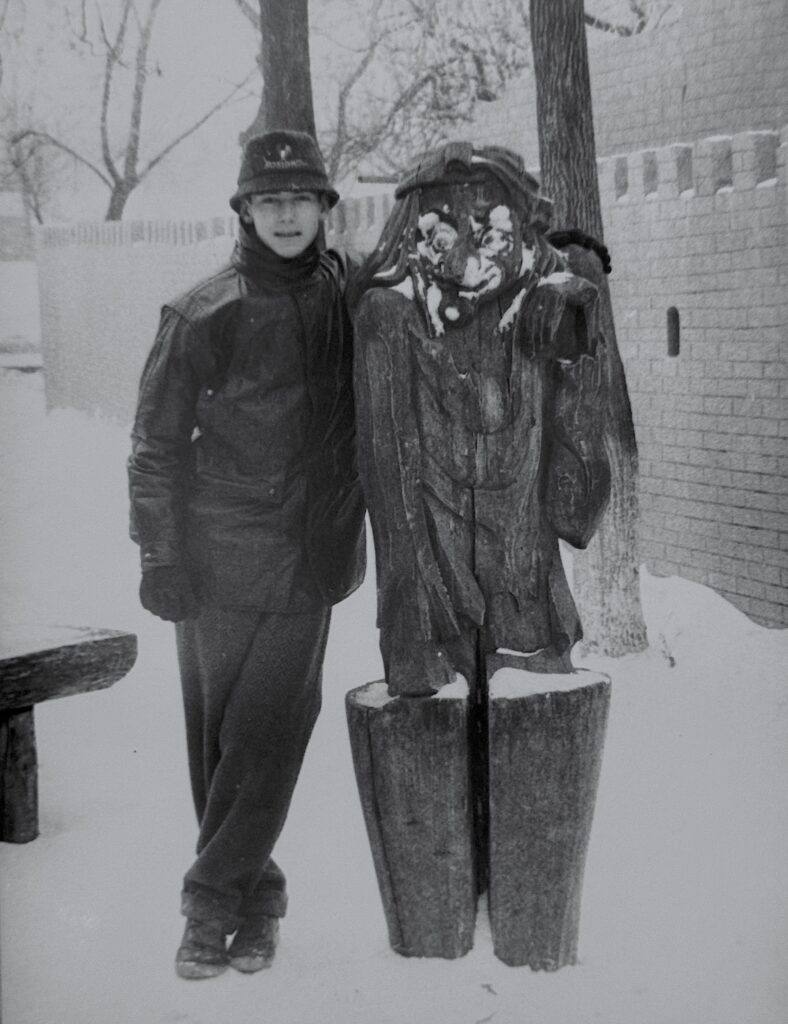
This photograph takes me back to 1989.
I am standing in a winter landscape wearing an oversized leather parka, wide trousers with cuffs, and a hat I made myself. My second year at the institute.
The hat was made from heavy coating wool. Loose, slightly prickly, with the texture of a military greatcoat. The domestic wool mills of that time produced surprisingly good fabrics. By today’s standards, some were rather coarse, but they had character, density, and a certain honesty.
I liked the style of the hat. I liked its practicality. And most of all, I liked that nobody around me wore anything like it.
In winter, the choices in Kyiv were predictable: knitted caps, fur ushankas, and, occasionally, the first wool baseball caps. A bucket hat made from heavy coating wool was something else. It could be worn with a coat, a denim jacket, or even a sporty bomber. It needed no excuse.
The first time I put it on and looked in the mirror, I liked what I saw.
I worked out the shape from photographs in foreign magazines. The construction came through experimentation, beginning with prototypes in heavy canvas. An oval top, a two-piece crown, and a four-piece brim: two upper and two lower sections. There was no lining. But there were ventilation eyelets on both sides of the crown — a head should not sit inside a hermetically sealed container.
The brim was stitched with parallel rows. The stitching joined the layers, gave the brim structure, and allowed its line to be shaped.
And there was one more decision that seemed simply logical to me at the time.
The back half of the brim was slightly longer than the front.
The idea did not come from the bucket hat itself. I remembered Sherlock Holmes’s deerstalker, with its distinct front and rear peaks designed for different purposes. I transferred that principle to my own construction. At the back, the brim offered a little more protection. At the front, it left enough room for a clear view.
What interests me today is not that everything worked perfectly. It is that even then I was learning to make one form perform several functions.
Only much later did I learn that this form had a history of its own.
The origins of the bucket hat are commonly associated with early twentieth-century Ireland, particularly with rural people and fishermen. Its soft construction, compact shape, and ability to be folded into a pocket all made practical sense in a wet and windy climate. Wool fabrics retaining their natural lanolin were water-repellent, not waterproof. That distinction matters. A good material does not necessarily defeat nature. Sometimes it simply knows how to negotiate with it.
By the middle of the twentieth century, soft brimmed hats had appeared in the military clothing of different armies. The American jungle hat became strongly associated with Vietnam. In the 1960s, the bucket hat moved beyond workwear and military gear. Mod culture helped turn practical forms into deliberate elements of style. Cinema did the rest.
The same soft brimmed shape can suggest an intellectual, an individualist, or simply someone who knows exactly what he wants to wear. That is why I have always found the form itself more interesting than its reputation as a trend. Its character changes with the person, while the object itself remains remarkably simple.
I returned to the bucket hat much later, with years of experience in garment construction and tailoring behind me.
The original purpose had hardly changed. I still wanted a versatile hat that protected against the weather and retained the silhouette I had envisioned all those years ago. What had changed was my understanding of materials.
I used double wool. It allowed the hat to retain its winter function while becoming lighter and more suited to tailored clothing. It held its shape without fusible interlining.
The parallel stitching on the brim does more than join the layers. It fixes the construction, creates the necessary firmness, establishes a visual rhythm, and allows the brim to be shaped almost as if a thin wire were hidden inside. There isn’t one. The memory of the shape comes from the fabric and the stitching.
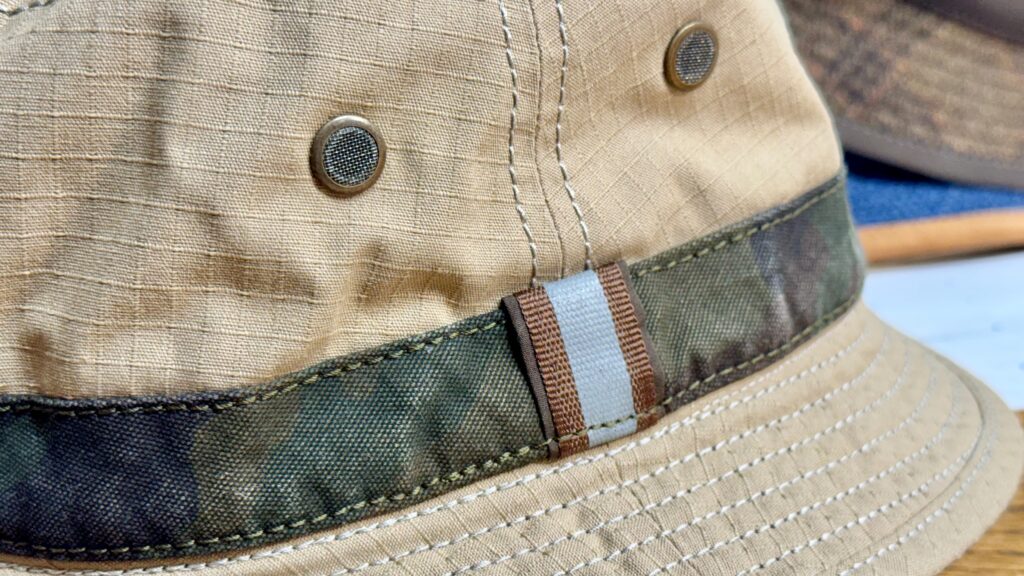
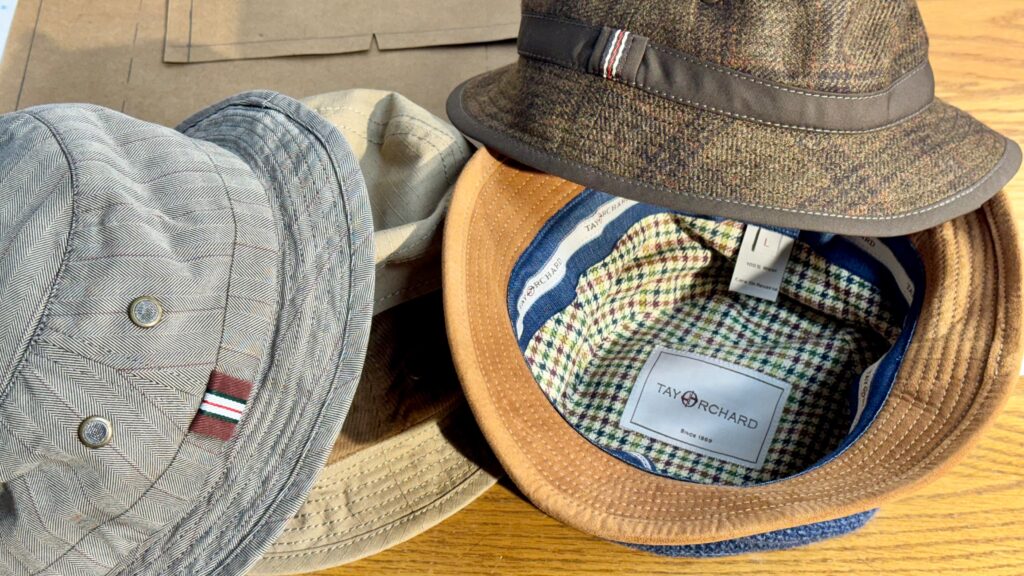
The hat may look soft, but its behavior is never accidental.
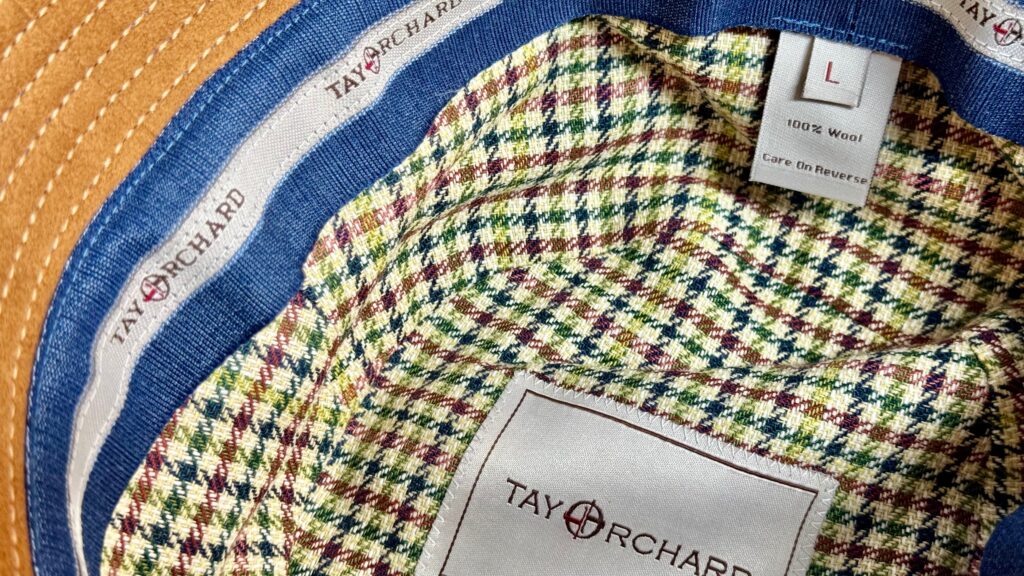
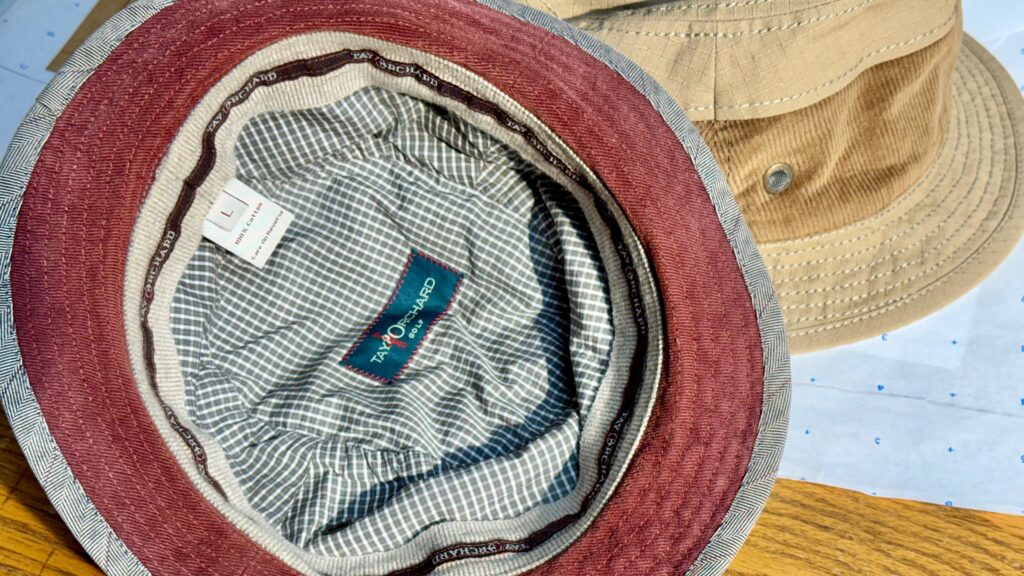
The same applies to the inside.
If I could change one thing about my first student hat, I would add a lining. It may seem like a minor detail. To me, it isn’t.
We used to make jackets that, according to my colleagues, could almost have been worn inside out, so sophisticated was the construction of the lining compared with the restraint of the outer shell. I have always liked that contradiction. A garment does not have to tell the world everything it knows.
The outside speaks to the world. The inside speaks to its wearer.
Every bucket hat I make today has a reason to exist. Different faces, different seasons, different clothes, different proportions. The task is not to make another hat. It is to make the one that makes sense for that person.
The young man in the black-and-white photograph could not have known any of this.
He did not know the history of the Irish country hat. He did not know its military variations. He did not know Tay Orchard.
He simply knew that he liked the shape.
And perhaps that is still the most honest reason to create anything.
Many decades have passed. There is only one thing I would change about his hat.
I would add a lining.
Otherwise, he got it remarkably right.