
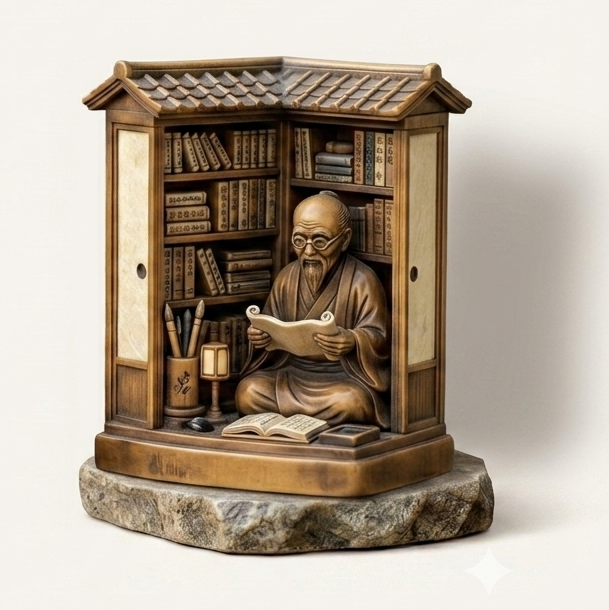
Books, films, music and conversations
that shape the eye.
FILMS BOOKS CONVERSATIONS X STITCHES X
Genius
(2016)
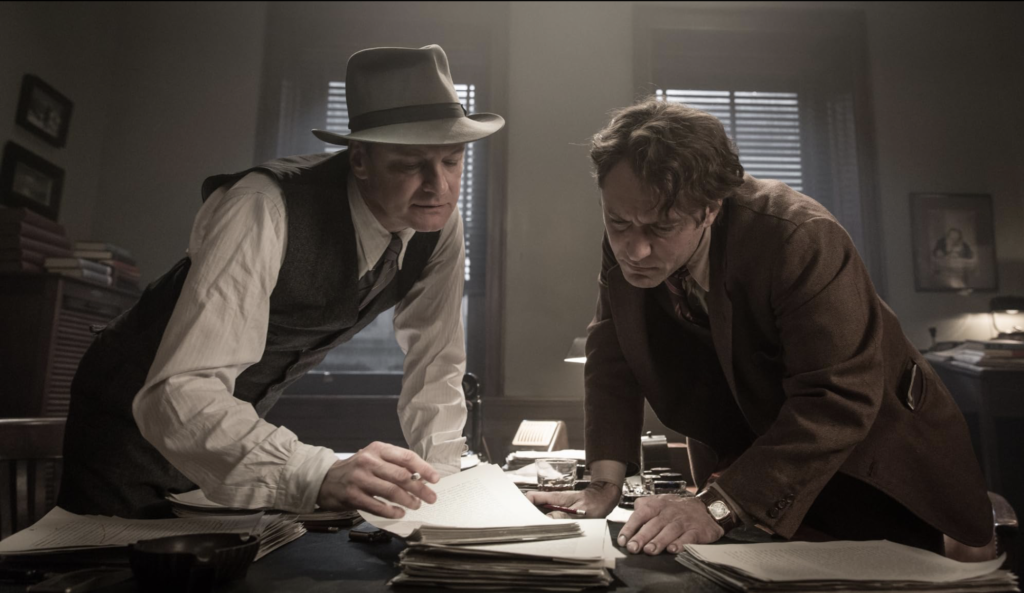
Photo: Lionsgate | StudioCanal | IMDb
A writer begins with an empty page. A tailor begins with a length of cloth.
Both face the same question: what can be removed without losing the idea?
A good editor cuts paragraphs the way a good tailor cuts fabric, carefully, respecting the original intention. Neither creates talent. Neither invents character. They simply reveal the form hidden inside.
This is perhaps why the friendship between an author and an editor feels like the one between a client and a tailor. Trust built stitch by stitch, draft by draft.
In the end, the best editing and the best tailoring share the same ambition. To make the work feel effortless, as if nothing had ever been changed.
One of the defining musical portraits of interwar New York. Gershwin blends classical orchestration with the unmistakable voice of jazz, capturing the energy of a city where Maxwell Perkins and Thomas Wolfe wrestled with thousands of pages.
Jiro Dreams of Sushi
(2011)
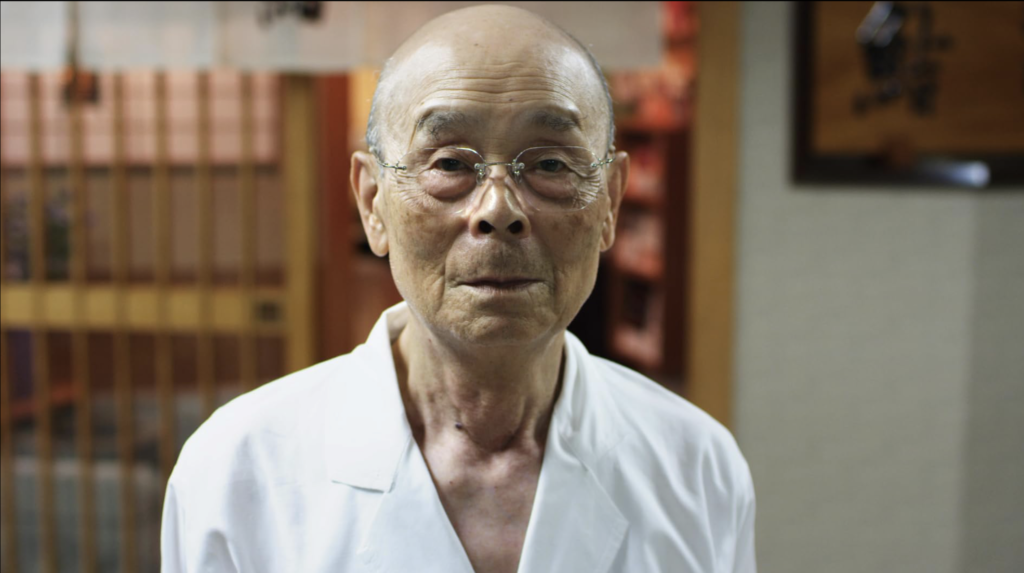
Photo: Magnolia Pictures | IMDb
He has been making sushi for more than seventy years.
The restaurant seats ten. Reservations take months.
He still arrives first and leaves last. Not ambition. Habit.
The film is not about sushi.
It is about what happens when a person decides that one thing is worth an entire life.
A quiet portrait of mastery, where repetition is not routine, but a way of getting closer to perfection. Jiro’s world is built on attention, discipline, and the belief that there is always something more to refine.
The Outfit
(2022)
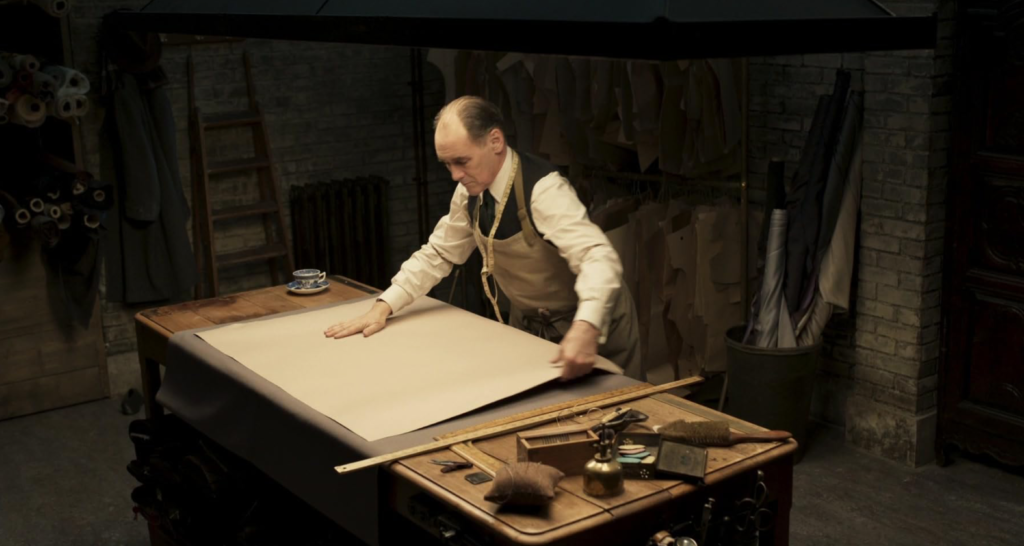
Photo: Focus Features / IMDb
A cutter, not a tailor. The distinction matters to him. So does every seam, every choice of cloth, every conversation in the shop. A film about craft as discipline and survival. The cutting table is never just a cutting table.
A small piece of the world of The Outfit — dark, restrained, and quietly tense. The music carries the same atmosphere as the film itself: elegance on the surface, danger underneath.
BOOKS
In Praise of Shadows
Junichiro Tanizaki (1933)
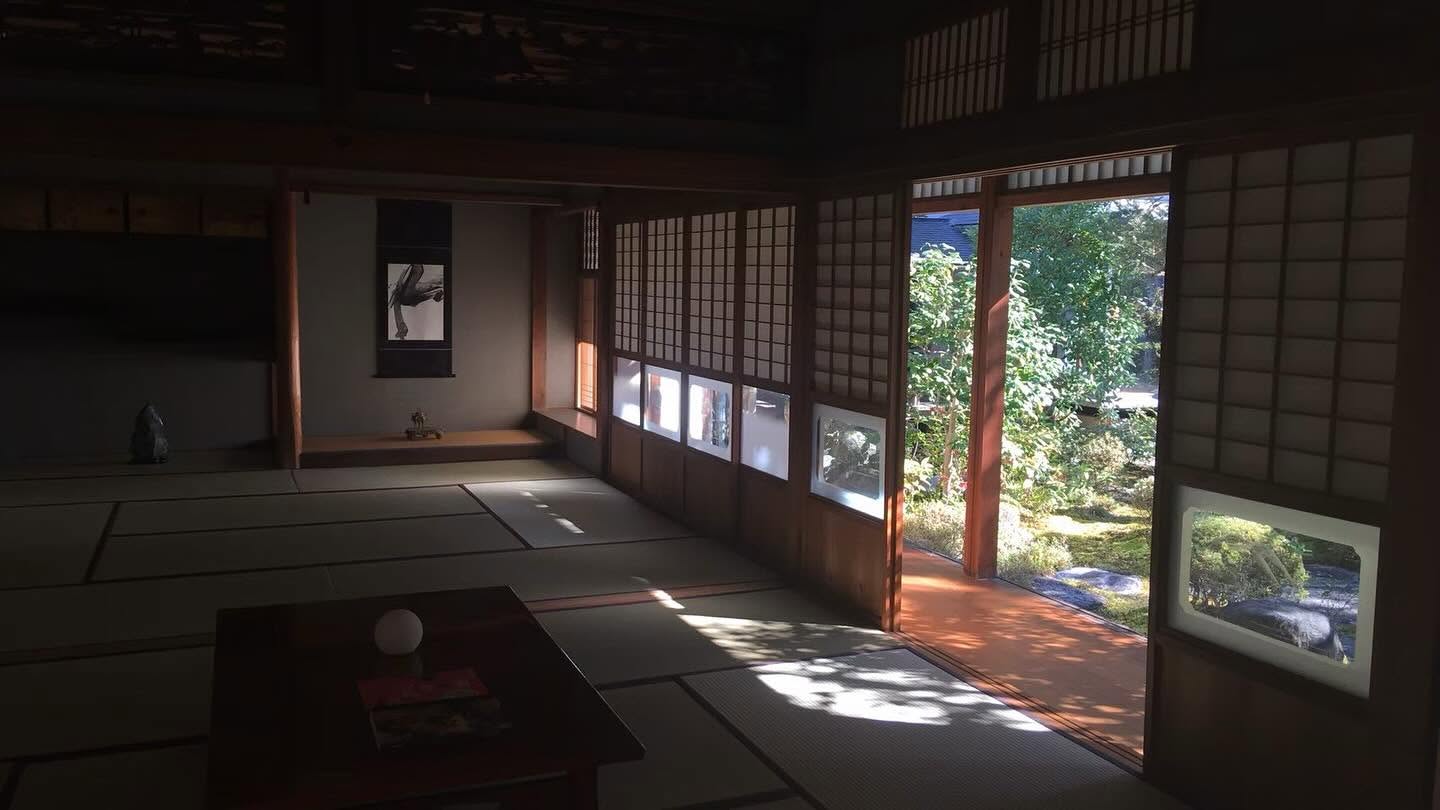
Photo: Fugenji-Itoutei Owner
Tanizaki wrote this essay in 1933. It has not aged because it was never about its time.
He argues that beauty does not announce itself. It settles into corners, into the patina of old wood, into the space between things. Western aesthetics, he suggests, flooded everything with light. Something was lost in the process.
A useful book for anyone who works with materials, surfaces and the question of what is enough.
A quiet meditation on shadow, light, and imperfection. The melody unfolds slowly, like the last light of day, leaving space for silence and for things that reveal themselves only in the shadows.
Martin Eden | The Sea-Wolf
Jack London (1904) | (1909)
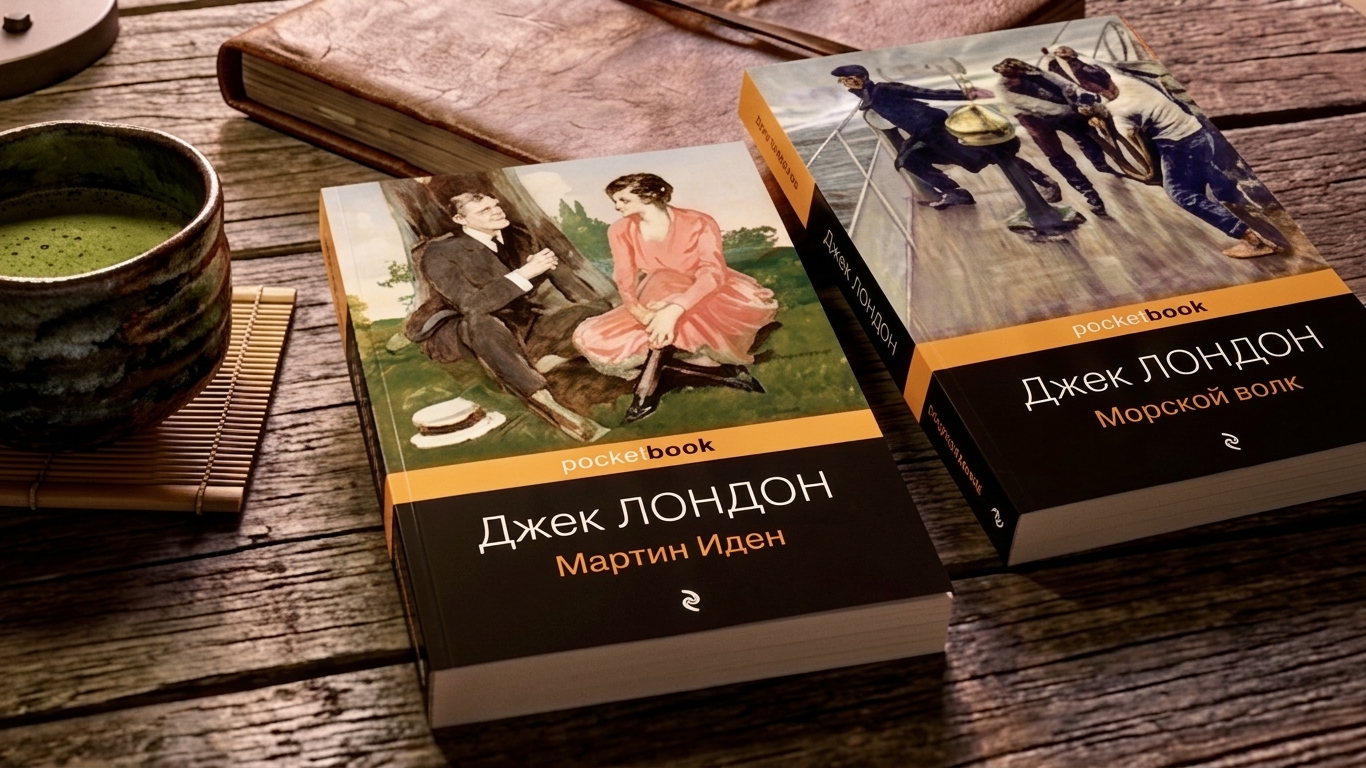
Image: Gemini 3.6 Flash
Some books become part of us long before we understand why.
Martin Eden and The Sea-Wolf by Jack London are two of them. I first read them in Russian, when I was much younger. Reading them again later in life, I found different questions in the same pages — about ambition, will, freedom, and the person we choose to become.
They are here not because they are famous books, but because they are part of my story.
The music is not from either books.
It belongs to that same time — the films, melodies and impressions that accompanied my childhood and youth. The Children of Captain Grant is one of those memories. Perhaps this is why it belongs here too.
The Best Remedy for the North Wind
Daniel Glattauer (2006)

Poster: The Best Remedy for the North Wind
I first heard this story several years ago.
Recently, I wanted to listen to it again. It felt a little like watching a favorite film for the second time, although the form is completely different.
The story unfolds through a correspondence between two people who happen to meet online. It seems that nothing much is happening, and yet everything happens in the words between them.
I have always valued dialogue as a form. Here, the dialogue is the story itself.
I never read this correspondence. I listened to it.
The narrator was excellent. That, too, was part of it.
Perhaps that is why, after several years, I wanted to hear it again.
Two violins, two temperaments, two very different worlds.
Grappelli’s light, airy voice meets Subramaniam’s deeper, more restrained line. They never try to become one, yet somehow they understand each other.
A nocturnal conversation of its own, carried by improvisation, pauses, and the space between the notes.
Stoner
John Williams (1965)

Photo: Barnes & Noble
This book does not offer a gripping plot. Nothing in it makes you say, “Well, I did not see that coming.”
That is exactly why it stays with you after the last page.
William Stoner lived an ordinary life. He taught literature. He loved. He raised a daughter. He did not always say what he thought. He did not always hold his ground. But he went the distance.
Today, box office records are broken by superheroes. But a real superhero is someone who simply sees their own life through. No special powers required.
Stoner is exactly that.
Reading his story, you start asking yourself questions you never seem to find time for.
Was the work you devoted years to something you truly loved?
Was the love real?
Were there moments when you walked past something and later wished you hadn’t?
This book did not reveal these truths.
It simply brought them into the light.
In “Mercy,” Max Richter seems to capture something of William Stoner’s inner life.
Quiet, restrained, and deeply melancholic, the music carries a kind of beauty that never asks to be noticed.
The Remains of the Day
Kazuo Ishiguro (1989)
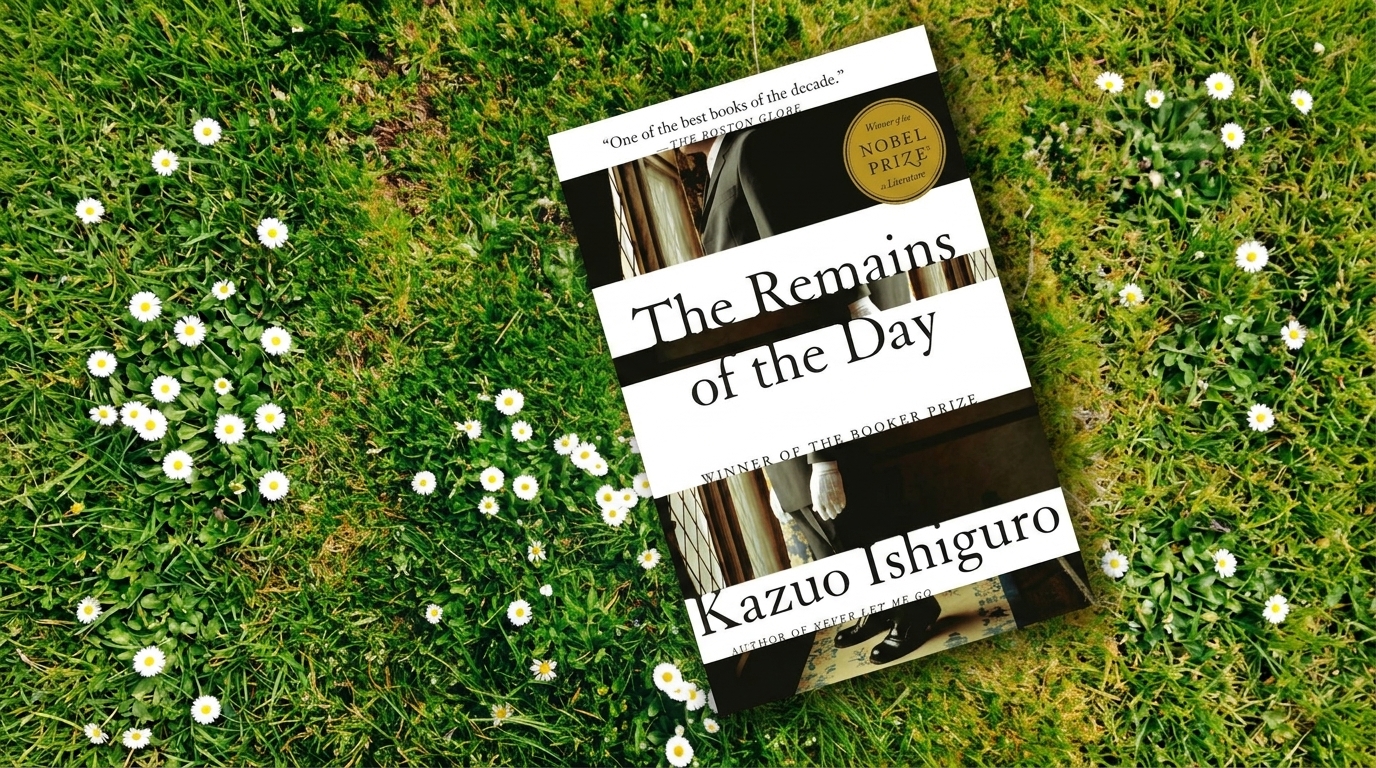
Poster: POLITURCO
At first, this book reminded me strongly of Downton Abbey. The period, the house, the rituals, the hierarchy, the impeccable butler — I even found myself picturing its characters the same way.
Somewhere in the middle, I began to have my doubts. I wasn’t yet sure this story would stay with me.
But the final pages made me look back at the whole book differently.
That is what some books do. The ending changes everything before it.
After finishing the book, I became curious about its author. Kazuo Ishiguro was born in Nagasaki and moved to Britain with his family when he was five. He became a British writer and writes in English. Yet he created such a convincing English world that it is easy to forget that he was not born inside it.
Perhaps that small distance allowed him to see this world with particular clarity.
I am not sure many writers of the old English school could have written this England more convincingly.
Ishiguro was awarded the Nobel Prize in Literature in 2017. His prose is remarkably restrained. Much of what matters happens quietly, between the lines.
I want to write more about this book in Practice.
Now it has a place on my shelf in Library.
Music by Jóhann Jóhannsson seems to work with the same material as Ishiguro’s novel: silence, the unspoken, and time that cannot be recovered.
Flight from the City begins with the strict, almost mechanical pulse of the piano. It feels like the perfect order of Darlington Hall, Stevens’s impeccable posture, and his unwavering devotion to duty. Then the strings quietly enter, and the perfect form begins to resonate from within.
They seem to carry everything Stevens has kept unspoken for decades: affection for Miss Kenton, doubt, and the late realization that a life devoted to someone else’s greatness has quietly passed him by.
Ishiguro leaves Stevens on the pier in the evening light, suggesting that the best part of the day may still be ahead. Jóhannsson gives that moment a sound: austere, luminous, and deeply sad, like a quiet farewell to what can never return.
CONVERSATIONS
Ralph Lauren
(2019)
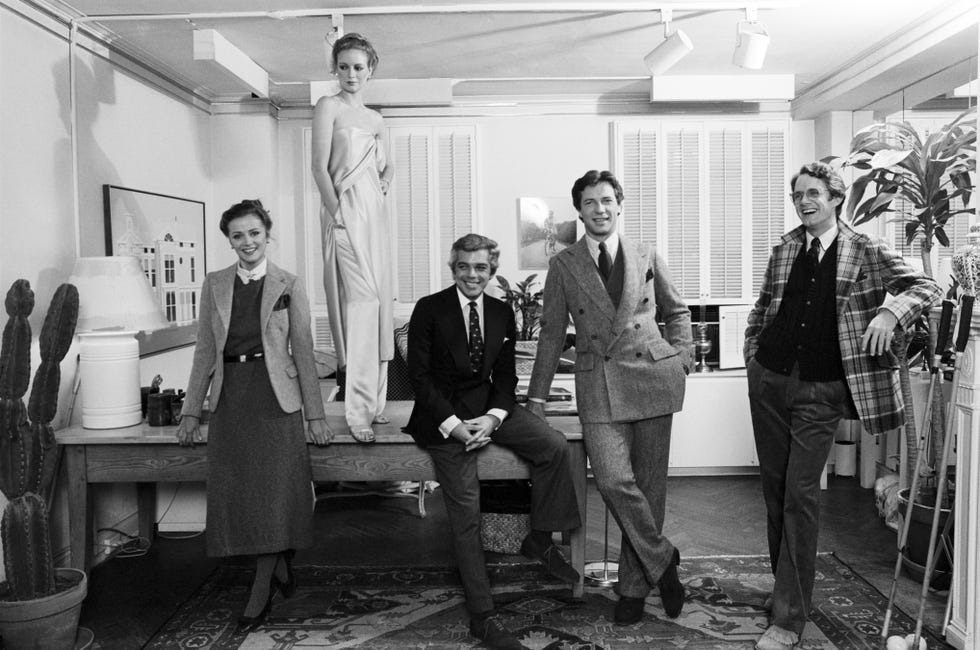
Photo: Susan Wood | Getty Images
When I first discovered the world of Ralph Lauren, I knew almost nothing about the man behind it.
For me and my friends, who were fascinated by American style, he became a reference point. Something inside told me there was something real behind those clothes. We wanted more of it and did not want to lose the thread.
Today, many years later, I look at his legacy with different eyes.
Ralph Lauren was not a tailor. Perhaps that is why he saw clothing a little differently.
He understood that clothing remembers.
Savile Row. The American West. The working man’s jacket. The cowboy. Military uniform. Native American traditions.
He did not mix these things. He translated them.
And America saw itself for the first time.
Perhaps that is why his influence on me became something more than the influence of a celebrated designer.
He showed me that the new does not have to begin by destroying the old.
Sometimes it is enough to see in something familiar what others no longer notice. To understand its history and preserve its character. To place it beside something else so that the two begin to speak to each other.
I look for those same paths, seeking a thoughtful connection between different languages of clothing.
Recently, I watched the biographical film Very Ralph. It shows the scale of the journey of a great American. But what interested me most was not the scale of his brand.
At the center of this story is a man who saw more than others, trusted his intuition, and was proven right.
It is difficult to compare him with Armani or Yamamoto. He is American.
Lauren was first, and he remains unique.
X STITCHES X
Stitches

Wounded Marines ride on top of converted tank used as a make-shift ambulance during the The Battle of Huế, Vietnam, 1968.
BY JOHN OLSON/THE LIFE IMAGES COLLECTION/GETTY IMAGES.
In high school, I saw this photograph in a newspaper.
I don’t remember what was written beneath it. I don’t remember why it was published. But I cut it out and kept it.
I could look at it for minutes.
It was the faces that drew me in. Not heroic, and not posed. A wounded soldier. His companion holds a bottle of solution above him — an improvised IV. Other people nearby. Exhaustion, pain, concentration.
I didn’t think of it as a document of war. I simply couldn’t look away.
Many years later, I learned that the photograph was taken during the Battle of Huế. A young photographer was documenting wounded American Marines on the armor of a tank being used as an improvised ambulance.
Later, I learned about the fate of the people in the photograph. Even the identity of one of the wounded men was misidentified for many years.
I kept the photograph without knowing anything about its story. And it kept a moment that otherwise would have disappeared long ago, together with the people who were part of it.
Perhaps that is why I called this shelf Stitches.
A stitch holds things together. Sometimes fabric.
Sometimes memory. A small mark of something we choose to keep.
Some things we preserve intentionally.
And some simply become stitched into us one day.
This photograph is one of them.
Yoichi
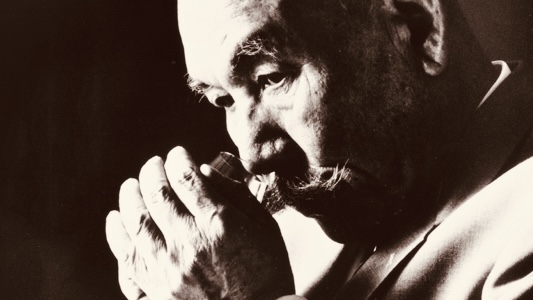
Photo: David Lefranc
Masataka Taketsuru came to Scotland in 1918 to learn. He enrolled at the University of Glasgow, trained at several distilleries, and returned home with two things: a Scottish wife, Rita Cowan, and two notebooks containing everything he had learned — from the shape of the stills to the composition of the water.
A few years later, he built a distillery on Hokkaido. The location was no accident. Its climate, landscape and damp air reminded him of Scotland.
He did not want to reproduce a technique.
He wanted to reproduce the conditions.
While major producers gradually moved to more efficient and predictable methods of heating, Yoichi continued to fire its stills by hand with coal.
Direct firing requires constant human presence. You have to watch the temperature, adjust the amount of coal, and feel what is happening inside the still. It is inconvenient, unpredictable and demands experience.
That is why almost everyone else abandoned it.
And why the Japanese kept it.
This method of heating gives whisky a character that cannot be achieved by simply following a recipe. Much like a tailor’s iron gives a jacket volume and life that no automated press can reproduce.
There is also Mizunara, the Japanese oak. Difficult to work with, slow to release its aromas, demanding patience. It is less forgiving than more familiar types of oak.
Craftsmen who deliberately choose a difficult material, knowing it will require more time and effort, are recognizable in any profession.
Japan did not reinvent whisky.
It took Scottish craftsmanship at a moment when it had not yet been fully optimized, and preserved it with the discipline the Japanese bring to anything they believe is worth preserving.
I think about this whenever I see corners being cut where they should not be.
The material always knows.
Before the person does.